7 Steps to Create Flash USDT Using the New Method
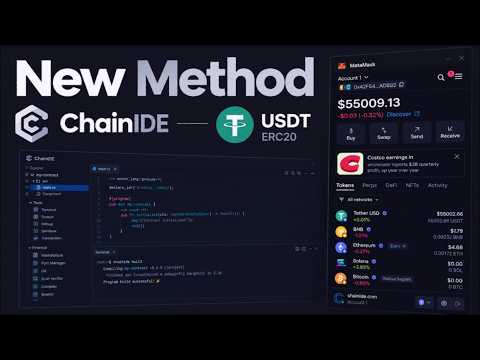
Video: How to Create Flash USDT With New Method 2026
Flash USDT is an ERC20 token created through a specific development and deployment workflow involving ChainIDE and MetaMask. This new method provides a structured way to generate Flash USDT tokens by writing smart contracts, deploying them on an Ethereum-compatible network, and managing tokens through a wallet interface. For detailed scripts and setup, visit Flash USDT official site.
## Understanding Flash USDT and Its Creation
Flash USDT is a token that mimics the USDT stablecoin format but is generated using a custom smart contract. The method revolves around building an ERC20 token contract that you can deploy on a testnet or mainnet Ethereum-compatible blockchain. This approach allows developers and testers to simulate USDT transactions or create Flash USDT tokens for educational and development purposes.
## Step 1 ChainIDE Setup and Smart Contract Writing
ChainIDE is an online integrated development environment specialized for smart contract development. To create Flash USDT, first register or access ChainIDE, then start a new Solidity project. The key is to write an ERC20 token contract that defines the Flash USDT token properties—name, symbol, decimals, and total supply. The Solidity code provided on the official site includes functions for token transfer, balance tracking, and allowance management.
## Step 2 Deploying the Flash USDT Contract
Once your smart contract code is ready and compiled in ChainIDE, the next step is deployment. Choose the Ethereum network you want to deploy on, often a testnet like Ropsten or a mainnet for real tokens. Connect your MetaMask wallet to ChainIDE to authorize the deployment transaction. The deployment will generate a unique contract address representing your Flash USDT token on the blockchain.
## Step 3 Connecting MetaMask and Interacting with the Contract
MetaMask acts as your wallet and interface for interacting with the deployed Flash USDT contract. After deployment, add the Flash USDT token address to MetaMask to view token balances. You can then perform transactions such as sending Flash USDT tokens to other addresses or approving allowances. MetaMask ensures secure signing of transactions and displays network fees, which must be paid in ETH or the network’s native token.
## Step 4 Testing and Verification
Before using Flash USDT tokens extensively, thorough testing is crucial. Use ChainIDE to run unit tests on your smart contract functions or interact with your contract via MetaMask on a testnet environment. Always verify the contract source code and confirm the address to avoid scams or errors. Testing helps identify common mistakes like incorrect token supply or transfer functions.
## Step 5 Common Mistakes and Security Best Practices
Many new developers forget to check the contract’s source code or network compatibility, which can lead to loss of funds or unusable tokens. Never send real funds to unknown or unverified contracts. Always double-check contract addresses and transaction details before signing. The Flash USDT method described is for educational and development use—avoid using it for financial purposes without proper audit.
## Step 6 Use Cases for Flash USDT
Flash USDT can be used for learning how ERC20 tokens work, testing decentralized finance (DeFi) applications that require USDT, or simulating stablecoin transactions on Ethereum. It provides developers a safe environment to experiment without risking real assets.
## Useful Links
- Official Flash USDT Setup and Scripts — access to bonus scripts and full walkthrough
## Итог
Creating Flash USDT involves writing an ERC20 token contract in ChainIDE, deploying it via MetaMask on an Ethereum network, and interacting with it through wallet transactions. This method is ideal for developers and testers who want to understand the workings of stablecoins like USDT without using real tokens. Always ensure thorough testing and security checks before interacting with any smart contract. The channel Rca FastPrint provides a comprehensive breakdown and code resources for this process. For scripts and further details, visit the official Flash USDT site linked above.
Key takeaways
- Flash USDT is created through smart contracts on Ethereum using ChainIDE and MetaMask.
- The process involves ERC20 token creation, deployment, and wallet interaction.
- ChainIDE offers a development environment for writing and testing smart contracts.
- MetaMask is used to connect and interact with Ethereum blockchain wallets.
- Security checks and contract verification are critical before any transactions.
Source: How to Create Flash USDT With New Method 2026 · Markdown version
Questions & answers
What is Flash USDT and how does it differ from regular USDT?
Flash USDT is a custom ERC20 token created through smart contracts for testing or educational purposes. Unlike official USDT, it is not backed by actual reserves and is used mainly to simulate USDT behavior on Ethereum networks.
Which tools are needed to create Flash USDT?
You need ChainIDE, an online smart contract development environment, to write and deploy the contract, and MetaMask, a browser wallet, to connect with the Ethereum network and manage tokens.
Is it safe to use the Flash USDT creation method for real transactions?
No, this method is intended for development and testing only. Always avoid sending real funds to unverified contracts and ensure you review the source code and contract addresses carefully.
Can Flash USDT be used on any Ethereum-compatible network?
Yes, Flash USDT can be deployed on any Ethereum-compatible network, including testnets like Ropsten or mainnets, provided you have the appropriate setup and wallet connection.